Analog Sensor กับ Digital Sensor ต่างกันอย่างไร? เลือกแบบไหนให้เหมาะกับ ESP32.
เปรียบเทียบ Analog Sensor และ Digital Sensor ตั้งแต่ ADC, Voltage/Current output, I2C/UART, Noise, Cable length, Calibration และการใช้งานกับ ESP32/Automation
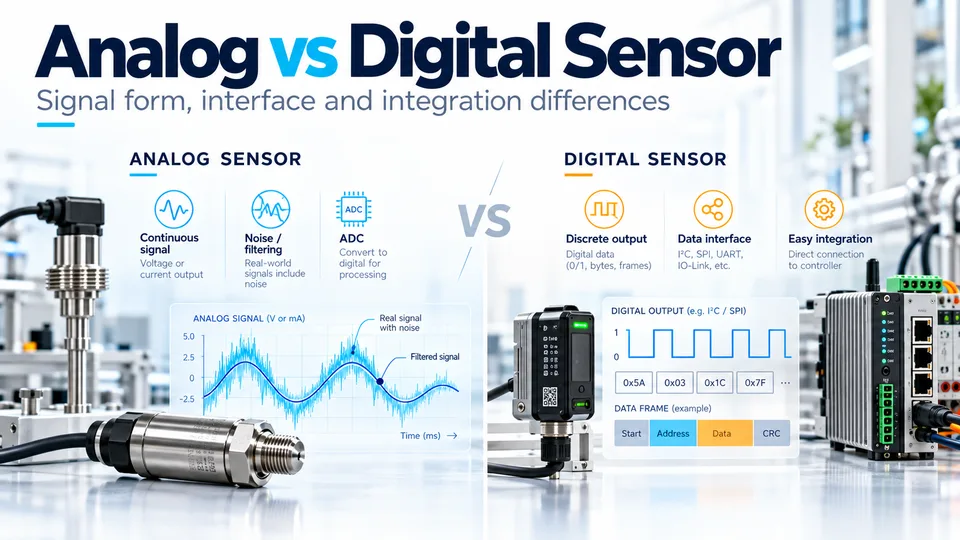
คำว่า Analog Sensor และ Digital Sensor บอกลักษณะของสัญญาณ/interface ที่ระบบรับ ไม่ได้บอกโดยตรงว่า Sensor ตัวไหนแม่นกว่า ทันสมัยกว่า หรือเหมาะกับงานจริงมากกว่า
ภาพรวมที่สำคัญคือ Analog และ Digital ต่างกันที่ signal path และ interface architecture มากกว่าคำว่าเก่าหรือใหม่
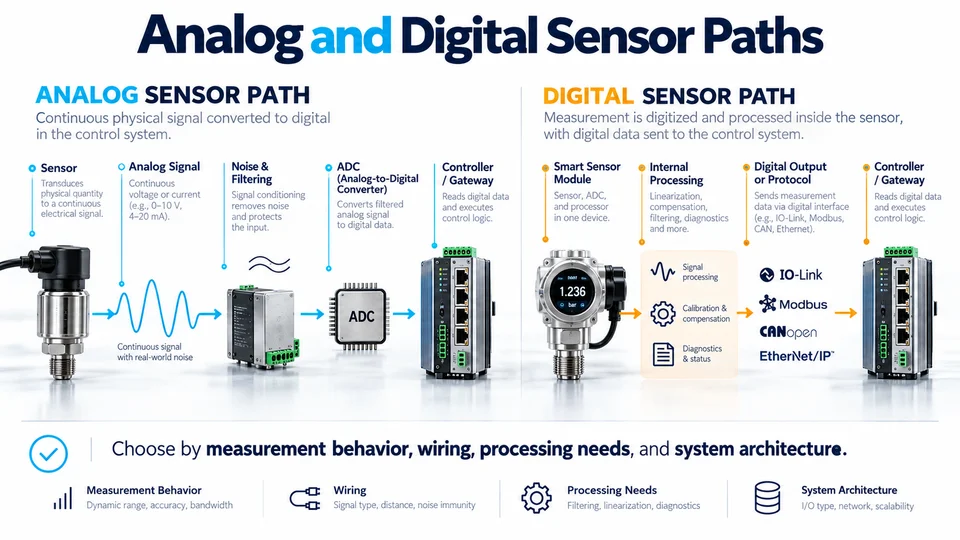
ทั้งสองแบบมีข้อดีและข้อจำกัดต่างกัน
Analog Sensor คืออะไร
Analog Sensor หรือ transducer บางชนิดให้สัญญาณต่อเนื่องที่สัมพันธ์กับค่าที่วัด เช่น:
- แรงดัน
- กระแส
- ความต้านทานที่เปลี่ยนตามสภาพ
- 0–10 V
- 4–20 mA ในงานอุตสาหกรรมบางประเภท
ถ้าใช้กับ MCU เช่น ESP32 โดยตรง สัญญาณแรงดันมักต้องผ่าน ADC
Sensor
  ↓ Analog voltage
ADC
  ↓ Digital value
ESP32 software
อ่าน ADC เพิ่มที่ ADC กับ PWM ต่างกันอย่างไร
Digital Sensor คืออะไร
Digital Sensor มักมีวงจรแปลง/ประมวลผลอยู่ภายในแล้ว และส่งผลลัพธ์ผ่าน interface เช่น:
- GPIO state
- pulse/frequency
- I²C
- SPI
- UART
- 1-Wire หรือ interface เฉพาะบางชนิด
ตัวอย่าง architecture:
Sensing element
   ↓
Internal ADC / processing
   ↓
I2C / SPI / UART
   ↓
MCU
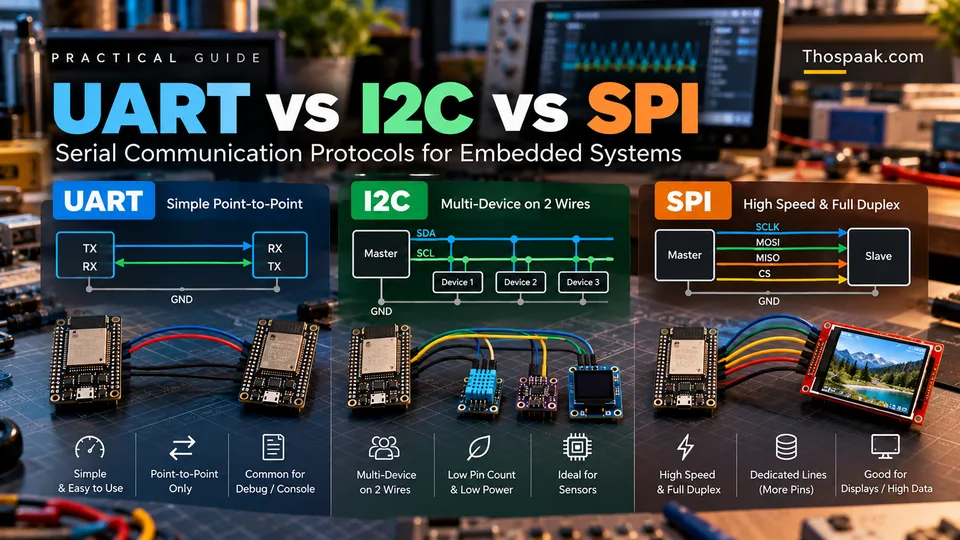
อ่านเรื่อง bus ต่อได้ที่ UART, I²C และ SPI ต่างกันอย่างไร
Digital ไม่ได้แปลว่าแม่นกว่าเสมอ
Sensor Digital ราคาถูกอาจมี accuracy ต่ำกว่า Analog transducer คุณภาพสูงมาก
ในทางกลับกัน Analog Sensor ที่ดีอาจเสีย performance ถ้า:
- ADC reference ไม่ดี
- supply มี noise
- wiring รับ EMI
- ground มีปัญหา
- input range ไม่ match
- scaling ใน software ผิด
ดังนั้นต้องมองทั้ง measurement chain
Analog เด่นตรงไหน
Analog interface มีข้อดีเมื่อ:
- ต้องการใช้ transducer มาตรฐานภาคสนาม
- ต้องการ signal ที่สัมพันธ์กับค่าจริงโดยตรง
- ระบบเดิมมี analog input อยู่แล้ว
- ต้องการตรวจ waveform หรือ dynamic behavior
- ใช้ current-loop/interface ที่ออกแบบมาสำหรับงานสายยาว
แต่ต้องออกแบบ signal conditioning และ ADC ให้เหมาะสม
Digital เด่นตรงไหน
Digital Sensor ช่วยลดภาระบางส่วน เช่น:
- ADC อยู่ในอุปกรณ์แล้ว
- calibration coefficient อาจถูกจัดการภายใน
- ส่งหลายค่าผ่าน bus เดียว
- wiring ระหว่าง MCU กับ sensor บนบอร์ด/ระยะสั้นง่ายขึ้น
- software อ่าน engineering data ได้โดยตรงมากขึ้น
แต่ยังต้องดู:
- logic voltage
- bus pull-up
- address conflict
- cable length
- EMI
- protocol timeout
- stale data
0–10 V กับ 4–20 mA ต่างจาก Sensor Module อย่างไร
ในงานอาคาร/อุตสาหกรรม Sensor จำนวนมากไม่ได้ถูกออกแบบให้ต่อเข้าขา ADC ของ MCU โดยตรง
0–10 V
ข้อควรคิดคือ input range ของ MCU/ADC อาจต่ำกว่า 10 V จึงต้องมีวงจร interface/conditioning ที่เหมาะสม
4–20 mA
เป็น current-loop ที่นิยมในงานภาคสนามเพราะช่วยให้ส่งสัญญาณระยะไกลและตรวจเงื่อนไขบางอย่างได้ดี แต่ต้องมี receiver/shunt/interface ที่ถูกต้องก่อน MCU อ่านค่า
อย่าต่อ loop เข้าขา GPIO/ADC โดยเดา
GPIO digital input ก็ถือเป็น Sensor interface ได้
บาง Sensor ไม่ส่งค่าต่อเนื่อง แต่บอกสถานะ เช่น:
Float switch → HIGH / LOW
Door contact → Open / Closed
Limit switch → Active / Inactive
ระบบแบบนี้เรียบง่ายและมักเชื่อถือได้มากเมื่อคำถามมีแค่สองสถานะ
หาก input ปล่อยลอย ต้องจัด pull-up/pull-down ให้เหมาะสม อ่านต่อที่ Pull-up และ Pull-down Resistor คืออะไร
Pulse Sensor เป็นกึ่งกลางที่ควรรู้จัก
Flow meter, encoder หรือ energy pulse output บางชนิดส่ง pulse แทนการส่งค่าตัวเลข
ตัวอย่าง:
จำนวน pulse ในช่วงเวลา
        ↓
คำนวณ Flow rate / speed / energy
ข้อดีคือ interface ง่าย แต่ต้องคิดเรื่อง:
- pulse width
- debounce/noise
- interrupt/counter
- overflow
- lost pulse
- scaling constant
อ่าน Timer/Interrupt เพิ่มที่ Interrupt และ Timer คืออะไร
สายยาวเปลี่ยนเกม
สิ่งที่ใช้ได้บน Breadboard ไม่ได้แปลว่าจะใช้ได้ในฟาร์มหรือห้องเครื่อง
เมื่อสายยาวขึ้น ต้องคิดเพิ่มเรื่อง:
Sensor interface บนบอร์ด
→ signal conditioning / transceiver
→ field wiring / physical layer
→ controller / gateway
ดังนั้นอย่าขยาย I²C, GPIO หรือ analog voltage จาก prototype ไปเป็นสายภาคสนามโดยอัตโนมัติ ให้ประเมิน power/ground/noise ที่ Power Supply, Ground และ Noise และเลือก field/network layer ต่อที่ Embedded Connectivity & IoT Integration
- voltage drop
- ground potential difference
- EMI
- shielding
- surge/transient
- connector/environmental sealing
- protocol/interface ที่เหมาะกับระยะทาง
I²C ที่ดีมากบน PCB ไม่ใช่ตัวเลือกอัตโนมัติสำหรับ Sensor ระยะไกลหลายสิบเมตร
เลือกแบบไหนดี
ใช้คำถามนี้แทนคำว่า Analog หรือ Digital ดีกว่า:
- ต้องวัดอะไร
- Sensor อยู่ห่าง Controller แค่ไหน
- สภาพแวดล้อมมี noise หรือไม่
- ต้องการ accuracy/resolution เท่าไร
- ต้อง calibration อย่างไร
- มี supply/logic voltage อะไร
- ระบบต้อง fail อย่างไรเมื่อข้อมูลหาย
- เป็น Prototype หรือ Field installation
สรุป
Analog Sensor กับ Digital Sensor ไม่ได้มีฝ่ายที่ชนะทุกงาน
- Analog ให้ความยืดหยุ่นและเข้ากับ transducer ภาคสนามหลายแบบ แต่ signal chain ต้องออกแบบดี
- Digital ลดภาระ ADC/processing บางส่วนและเชื่อม MCU ได้สะดวก แต่ยังมีข้อจำกัดเรื่อง bus, logic และ data health
การเลือกที่ถูกควรเริ่มจาก measurement requirement + installation environment + interface architecture ไม่ใช่เลือกเพราะคำว่า Digital ดูใหม่กว่า