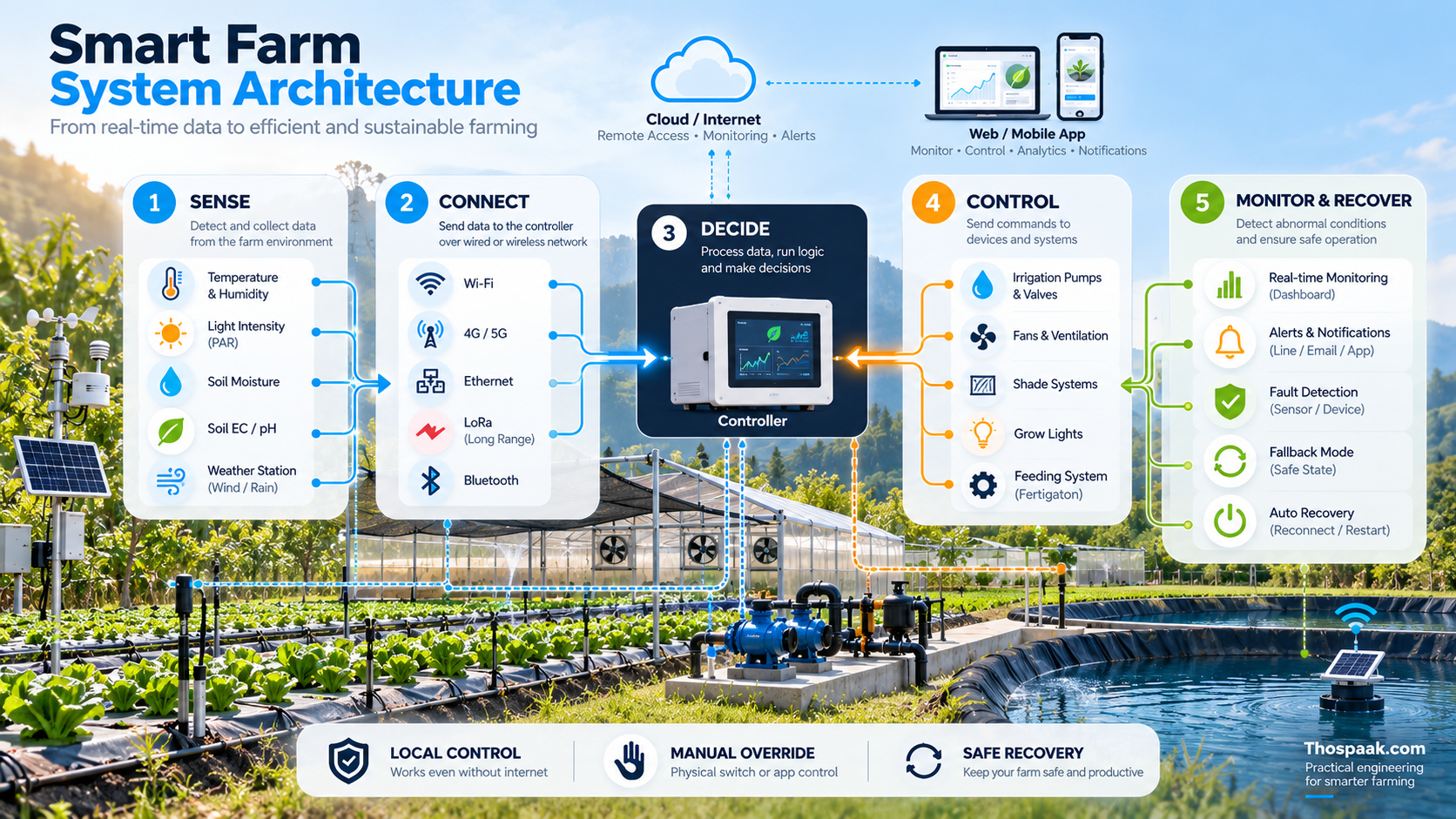
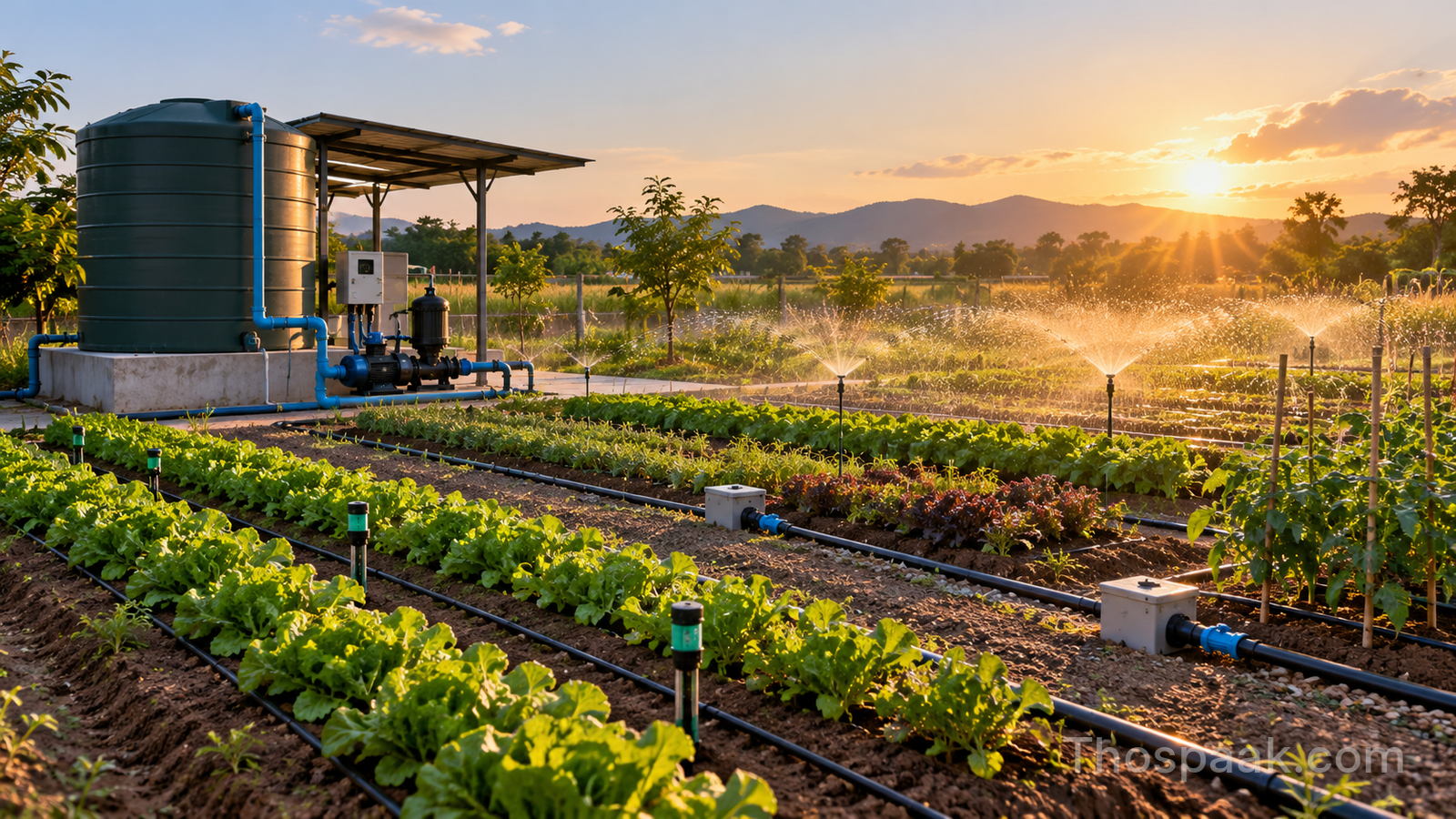
Weather & Environment Monitoring สำหรับ Smart Farm: วัดฝน อุณหภูมิ ความชื้น และสภาพแวดล้อมอย่างไรให้ใช้ตัดสินใจได้.
แนวทางออกแบบ Weather/Environment Monitoring ใน Smart Farm ตั้งแต่ placement, rain, temperature/humidity, greenhouse/outdoor context, data quality, freshness และการนำข้อมูลไปใช้กับ irrigation/alerts
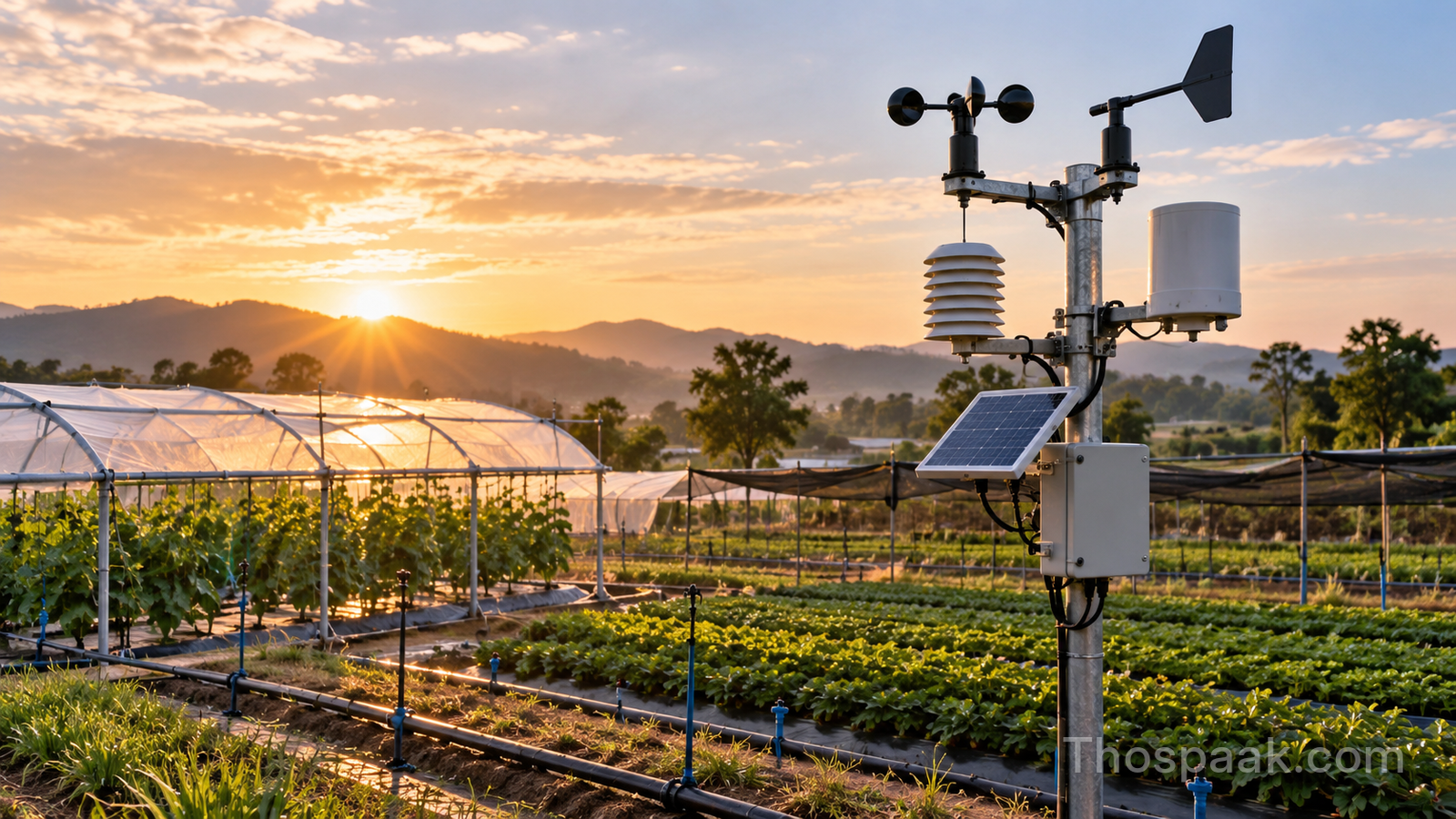
Weather/Environment Monitoring มีประโยชน์เมื่อข้อมูลถูกวางในบริบทของพื้นที่จริง ไม่ใช่ติด Sensor ไว้ตรงไหนก็ได้แล้วเรียกค่าที่อ่านว่า “สภาพอากาศของฟาร์ม”
พื้นฐาน Sensor อุณหภูมิ/ความชื้นอยู่ที่ Temperature & Humidity Sensor Guide หน้านี้เน้น system/application design
วัดเพื่ออะไร
เริ่มจาก decision เช่น:
- hold irrigation เมื่อมีฝนจริง/เพิ่งมีฝน
- แจ้งเตือน greenhouse ร้อนหรือชื้นเกินช่วง
- ดู trend microclimate ระหว่างโซน
- ใช้เป็นบริบทของ crop/irrigation events
ถ้าไม่รู้ว่าข้อมูลจะเปลี่ยน decision อะไร อย่ารีบเพิ่ม Sensor
Placement มีผลมากกว่ายี่ห้อในหลายกรณี
Temperature/Humidity sensor ใกล้:
- ผนังร้อน
- แดดตรง
- sprinkler
- exhaust fan
- หลังคา
อาจไม่ represent environment ที่ต้องการวัด
ควรออกแบบ radiation shield, airflow, height และตำแหน่งให้สัมพันธ์กับโจทย์
Outdoor vs Greenhouse
อย่ารวมเป็นค่าเดียว
Outdoor reference
Greenhouse A
Greenhouse B
Canopy / crop zone (ถ้าจำเป็น)
แต่ละ measurement มีบริบทต่างกันและอาจใช้ policy ต่างกัน
Rain: Actual กับ Forecast คนละหน้าที่
- rain gauge / rain sensor = สิ่งที่เกิดในพื้นที่
- forecast/API = สิ่งที่คาดว่าจะเกิด
ทั้งคู่ useful แต่มี failure mode ต่างกัน
สำหรับ irrigation อาจใช้ actual rain เป็น strong local evidence และ forecast เป็น adjustment/veto แบบมี expiry
Wind และสภาพแวดล้อมอื่น
ถ้างานต้องการ อาจวัด:
- wind speed/direction
- solar irradiance/light
- leaf wetness
- soil temperature
- CO2 ใน greenhouse
แต่ไม่ควรเพิ่มทุกตัวเพียงเพราะ weather station รองรับ
Data Quality
ทุก channel ควรมี:
- timestamp
- unit
- sensor/source id
- validity/quality
- last update age
ค่าที่ out-of-range หรือค้างนานควรถูก flag ก่อนเข้า automation
Sampling Rate
อุณหภูมิ/ความชื้นทั่วไปไม่จำเป็นต้อง sample ระดับ millisecond
sampling ที่เร็วเกินไปเพิ่มข้อมูลโดยไม่เพิ่ม insight และอาจทำให้ dashboard/noise หนักขึ้น
เลือก cadence ตาม time constant ของ process และ decision
Aggregation
เก็บ raw ตามความเหมาะสม แต่ dashboard อาจใช้:
- 5/15 นาที average
- min/max
- daily rainfall
- degree-hour style aggregate เมื่อมี use case
เก็บ event สำคัญแยกจาก trend
เชื่อมกับ Irrigation
ตัวอย่าง:
Soil request = dry
Rain hold = false
Weather data fresh
Tank/pump permission = true
→ irrigation request allowed
Weather ไม่ควรสั่ง actuator โดยตรงแบบไม่มี control context
Alerts
alert ที่ useful ควรเป็น state ที่มี duration/context เช่น:
- greenhouse temperature high > X นาที
- humidity high ต่อเนื่อง
- weather station stale
- rain event ระหว่าง active irrigation
อย่าแจ้งเตือนทุก spike สั้น ๆ จน operator ignore ระบบ
Sensor Failure
ถ้า weather node offline:
- irrigation อาจ fallback schedule/soil-only ตาม policy
- dashboard ต้องบอก data stale
- remote forecast อาจยังใช้ได้แต่ไม่ควรถูกแสดงเหมือน local measurement
Calibration / Maintenance
Sensor outdoor มี drift/fouling/environmental exposure จึงควรมี maintenance plan และตรวจเทียบตาม importance ของงาน
อ่านหลัก measurement ที่ Accuracy, Precision, Resolution & Calibration
Weather & Environment Monitoring ที่ดีจึงเป็น measurement system ที่รู้ตำแหน่ง เวลา คุณภาพ และบทบาทของข้อมูล ก่อนนำไปทำ automation