Enphase Monitoring API v4: เชื่อม Enlighten เข้ากับ Solar Monitor อย่างปลอดภัย.
คู่มือ Enphase Monitoring API v4 จากเอกสารทางการ: OAuth 2.0, API key, System Summary, Live Status SSE, W/Wh/% units, Grid/Battery direction, rate limits และแนวทาง normalize เข้า Solar Monitor
Enphase Monitoring API v4 เป็น official developer interface สำหรับอ่านข้อมูลระบบ Enphase จาก Enlighten/Enphase Cloud โดย API v4 มี contract สาธารณะละเอียดพอที่จะนำข้อมูลหลายชนิดมา normalize เข้าสู่ Solar Monitor ได้โดยไม่ต้อง reverse engineer Web/App traffic
บทความนี้โฟกัสเฉพาะ read-only monitoring: System, Summary และ Live Status สำหรับ PV / Consumption / Grid / Battery ไม่ครอบคลุม Commissioning, VPP หรือคำสั่งควบคุมอุปกรณ์
แหล่งข้อมูลหลักที่ใช้ตรวจสอบรอบนี้:
- Enphase Developer Portal
- Quick Start
- Monitoring API v4
- Monitoring API OpenAPI / Swagger
- Developer Plans
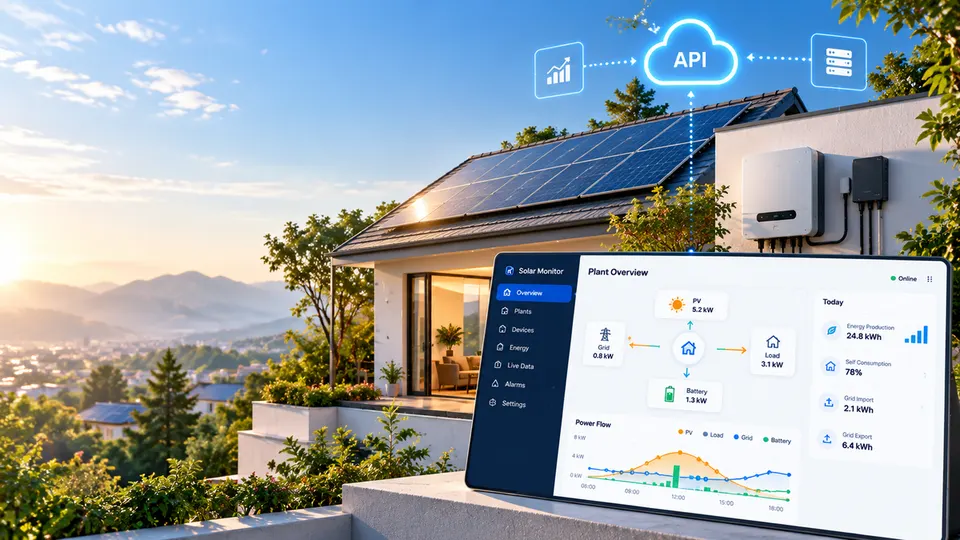
ภาพปกและแผนภาพในบทความเป็น Thospaak editorial illustration เพื่ออธิบาย architecture ไม่ใช่ screenshot จาก Enphase App/Enlighten และไม่ควรใช้ยืนยันหน้าตาอุปกรณ์หรือ UI รุ่นใดรุ่นหนึ่ง
Contract ใน repo ถูก pin จาก primary docs ปัจจุบัน ณ 17 ตุลาคม 2026 แต่ plan, quota และ commercial terms สามารถเปลี่ยนได้ ก่อน deploy จริงควรตรวจหน้า Developer Portal อีกครั้ง
ภาพรวมเส้นทางข้อมูล
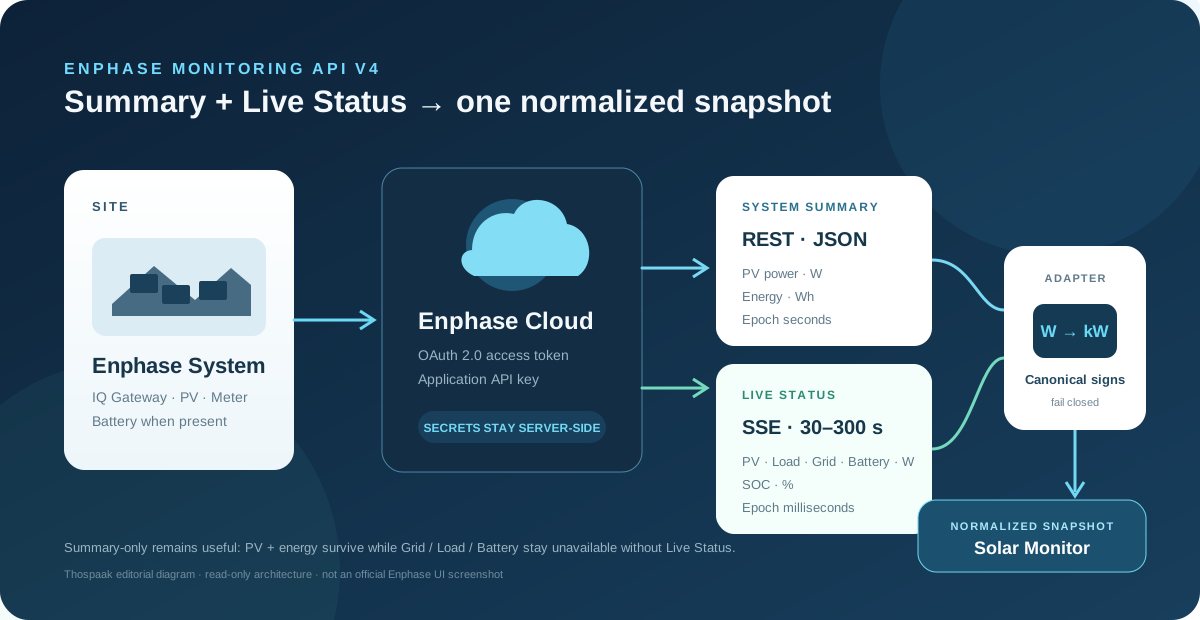
แนวคิดสำคัญคือ Browser ไม่ควรถือ Client Secret, access token หรือ refresh token. หน้า Solar Monitor ในเว็บนี้จึงเป็น fixture-only prototype ส่วน deployment จริงควรให้ server-side connector เป็นผู้จัดการ OAuth, rate limit และ vendor requests แล้วส่งเฉพาะ normalized snapshot ให้ Frontend
Enphase System / IQ Gateway
        ↓
Enphase Cloud
        ↓
Monitoring API v4
        ↓
Server-side Enphase adapter
        ↓
thospaak.solar-cloud.plant-snapshot
        ↓
Solar Monitor / History / Alerts
Authentication: OAuth 2.0 + API key
เอกสาร API v4 ระบุว่าคำขอต้องมีทั้ง:
- OAuth 2.0 access token ใน
Authorization: Bearer ... - API key ของ Application ใน header ชื่อ
key
Developer app ต้องได้รับ authorization จากเจ้าของ System ก่อนจึงจะอ่านข้อมูลของ System นั้นได้ ส่วน Client ID, Client Secret, refresh token และ access token เป็น server-side secret ไม่ควรส่งไปกับ JavaScript ฝั่ง Browser
สำหรับ Homeowner สามารถเริ่มจาก Developer Portal และ Watt plan ได้ ส่วน Installer มี Partner plan แยกต่างหากตาม eligibility ของ Enphase
Endpoint ที่ Adapter ใช้
PR79 เพิ่ม deterministic adapter enphase-api-v4-plant-v1 และ PR80 นำ adapter เดิมมาใช้ใน Solar Monitor โดยไม่เปลี่ยน canonical contract
| หน้าที่ | Official endpoint | สิ่งที่ใช้ |
|---|---|---|
| System identity | GET /api/v4/systems/{system_id} |
ID, name, timezone, address, status |
| System summary | GET /api/v4/systems/{system_id}/summary |
installed size, current PV, today/lifetime energy, report timestamps |
| Live Status | GET /api/v4/systems/{system_id}/live_data |
PV, Load/Consumption, Grid, Battery, SOC, live timestamp |
API v4 ยังมี production/consumption meter readings, device telemetry, event/alarm และ EV charger endpoints แต่ Solar Monitor prototype ไม่จำเป็นต้องดึงทุก surface ตั้งแต่แรก
System Summary: ใช้ได้แม้ไม่มี Streaming API
/summary เป็น endpoint สำคัญเพราะ response schema ระบุ unit ชัดเจน:
size_w— Wcurrent_power— Wenergy_today— Whenergy_lifetime— Whlast_interval_end_at— epoch timestamplast_report_at— epoch timestamp
Adapter จึงแปลง W → kW และ Wh → kWh แบบ deterministic ได้
ตัวอย่าง fixture:
size_w          7,800 W    → 7.8 kW
current_power   5,200 W    → 5.2 kW
energy_today   22,100 Wh   → 22.1 kWh
energy_lifetime 18,500,000 Wh → 18,500 kWh
last_interval_end_at มีความหมายสำคัญกว่าการใช้เวลาที่ Backend เพิ่ง fetch สำเร็จ เพราะ Solar Monitor แยก measurement time ออกจาก ingest time เพื่อไม่ให้ข้อมูลเก่าดูเหมือน realtime เพียงเพราะ API request เพิ่งตอบกลับ
Live Status ไม่ใช่ REST polling ธรรมดา
/live_data ใช้ response แบบ Server-Sent Events (text/event-stream) และรับ header duration ที่เอกสารกำหนดช่วง 30–300 วินาที
ภายใน event มี timestamp_epoch เป็น epoch milliseconds และ field หลัก เช่น:
| Field | Unit | ความหมายหลัง normalize |
|---|---|---|
pv_power |
W | PV production |
consumption_power |
W | Site load |
battery_soc |
% | Battery SOC |
battery_power |
W | + discharge, − charge |
grid_power |
W | + import, − export |
grid_status |
enum/text | Grid state เช่น On Grid / Off Grid |
Enphase เป็น Vendor ที่ mapping directional power ตรงกับ canonical contract ของ Thospaak อยู่แล้ว:
Grid     + = Import      − = Export
Battery  + = Discharge   − = Charge
จึงไม่ต้อง invert เครื่องหมายแบบ Solis/Huawei
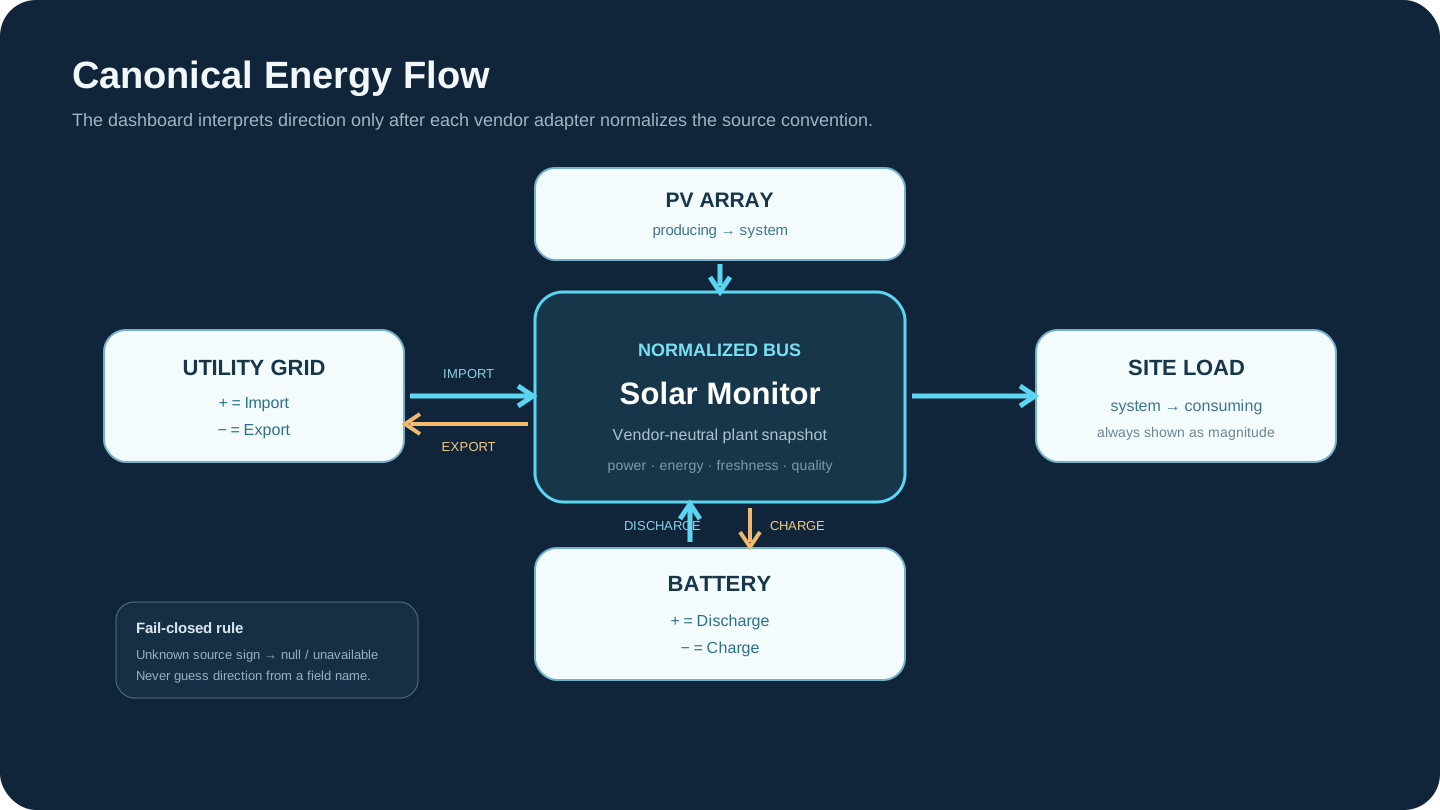
ตัวอย่าง Energy Flow ใน Solar Monitor
Enphase fixture หลักใน PR80 ใช้ค่าที่สร้างขึ้นเพื่อทดสอบ contract ไม่ใช่ข้อมูลบ้านจริง:
PV        5.5 kW
Load      3.8 kW
Grid     -0.7 kW  → EXPORT 0.7 kW
Battery  -0.9 kW  → CHARGE 0.9 kW
SOC       74%
Solar Monitor ไม่ต้องรู้ว่า Enphase ใช้ชื่อ grid_power หรือ battery_power เพราะ Adapter แปลงทุกอย่างเข้า SolarCloudPlantSnapshot ก่อน UI เสมอ
เปิดดูตัวอย่าง: Solar Monitor — Enphase fixture
ถ้าไม่มี Live Status ต้องทำอย่างไร
จุดที่ต้องระวังคือ System Summary กับ Live Status ไม่ใช่ capability เดียวกัน. Developer plan/access control และตัว System เองมีผลต่อ Streaming API
PR80 จึงเพิ่ม Scenario Lab ชื่อ Summary-only plan:
- PV power จาก Summary ยังอ่านได้
- Energy today/lifetime ยังอ่านได้
- installed capacity ยังอ่านได้
- Grid power =
null - Load power =
null - Battery power/SOC =
null - issue =
live-status:unavailable
นี่เป็น fail-closed behavior ที่ตั้งใจไว้ เพราะการคำนวณ Grid/Load/Battery จากสมการพลังงานโดยไม่มี measurement ที่ยืนยัน provenance อาจทำให้ Dashboard ดูแม่นทั้งที่จริงเป็นค่าประมาณ
Live Status มีเงื่อนไขมากกว่าแค่มี Token
OpenAPI ของ Enphase ระบุ error cases ของ Live Status เช่น duration ไม่อยู่ในช่วง, IQ Gateway ไม่ active/ไม่ report, system ไม่รองรับ live stream และ service connectivity errors
ดังนั้น production connector ไม่ควรตีความว่า HTTP connected = plant online หรือว่า Live Status ใช้ได้กับทุก System ที่ Summary ใช้ได้
ควรแยกอย่างน้อย:
Authentication / authorization
System connection status
Measurement freshness
Live-stream capability
Snapshot data quality
Solar Monitor ใช้ model นี้อยู่แล้ว: status, freshness และ quality เป็นคนละแกน
Plan และ Rate Limit มีผลต่อ Architecture
หน้า Developer Plans ปัจจุบันระบุ rate limit หลักของ Developer plans ดังนี้:
| Plan | Requests/min | Requests/month | Streaming API |
|---|---|---|---|
| Watt | 10 | 1,000 | ไม่รวม |
| Kilowatt | 50 | 50,000 | มี |
| Megawatt | 100 | 300,000 | มี |
Kilowatt/Megawatt ระบุค่าใช้ Live Status แยกจาก API hits บนหน้า plan ปัจจุบัน ดังนั้นการออกแบบ Backend ไม่ควรเปิด /live_data ค้างหรือเรียกใหม่ถี่ ๆ โดยไม่มีเหตุผลทาง product
แนวทางที่เหมาะกว่าคือแยก workload:
- Summary/energy — scheduled ingestion ตาม freshness ที่ product ต้องการ
- Live Status — เปิดเฉพาะหน้า/เหตุการณ์ที่ต้องการ realtime จริง
- Historical meter/device telemetry — ดึงตาม use case ของ chart/report
- Retry/backoff — เคารพ
429และ plan limits
Status mapping ใน Adapter เป็น Conservative Mapping
Enphase API มี system status หลายค่า เช่น normal, comm, micro, power, meter, battery และ status ที่เกี่ยวกับ storage/controller
Normalized contract ของ Thospaak มีเพียง:
online | offline | alarm | unknownดังนั้น adapter จึงทำ conservative mapping เพื่อ UI กลาง และเก็บ vendor provenance แยกไว้ ไม่ได้อ้างว่า normalized alarm เป็น severity taxonomy อย่างเป็นทางการของ Enphase
API Monitoring กับ IQ8P เป็นคนละเรื่อง
ถ้ากำลังเลือก Hardware ให้เริ่มจาก Enphase IQ8P: Microinverter 480 VA สำหรับตลาดไทย ซึ่งอธิบาย electrical limits, module compatibility และ backup architecture
ส่วนบทความนี้ตอบอีกคำถามหนึ่ง: เมื่อมี Enphase System แล้ว จะนำข้อมูล Cloud Monitoring มาใช้กับ Dashboard/Automation อย่างไรโดยไม่ทำ contract หลวม
เส้นทางจึงเป็น:
IQ8 / Gateway / Meter / Battery
        ↓
Enphase System
        ↓
Monitoring API v4
        ↓
Normalized Snapshot
        ↓
Solar Monitor
Boundary สำหรับ Production
สิ่งที่ PR80 ยังไม่ทำ:
- เก็บ Client Secret / refresh token จริง
- OAuth callback production
- scheduled polling / SSE worker
- database current/history
- alert delivery
- multi-tenant authorization
- Commissioning API
- VPP API
- remote control
ขั้นเหล่านี้ควรเริ่มเมื่อมี Enphase account/System จริงสำหรับ integration test เพื่อให้ auth lifecycle, plan access, Gateway capability, timestamps และ rate limits ถูกพิสูจน์ด้วย deployment จริง ไม่ใช่ fixture อย่างเดียว
สรุป
Enphase เป็น Vendor ตัวที่ห้าของ Solar Cloud foundation ที่มี public primary contract แข็งแรงพอให้ normalize ได้อย่างปลอดภัย
จุดเด่นของ API v4 คือ schema, unit, timestamp และ Grid/Battery sign semantics ชัดเจน ทำให้ Adapter ไม่ต้องเดาความหมาย ส่วน Streaming/Live Status ต้องแยกจาก Summary capability และออกแบบตาม plan/rate limit จริง
สำหรับทดลอง contract ตอนนี้ให้เปิด Solar Monitor แล้วสลับระหว่าง Enphase Plant ปกติกับ Scenario Summary-only plan เพื่อดูความแตกต่างระหว่าง ข้อมูลที่ไม่มี กับ ค่า 0 จริง