RS485 คืออะไร? ต่างจาก UART อย่างไร และทำไมใช้กับ Sensor/Meter ระยะไกล.
อธิบาย RS485 สำหรับ ESP32, Sensor, Meter และ Automation ตั้งแต่ differential signaling, bus topology, termination, biasing, UART transceiver, A/B naming และความสัมพันธ์กับ Modbus RTU
RS485 เป็นมาตรฐาน electrical/physical layer สำหรับการสื่อสาร serial แบบ differential ที่นิยมในงานอาคาร โรงงาน Energy Meter, Inverter, PLC, Sensor และระบบ Automation เพราะเหมาะกับสายที่ยาวและ environment ที่มี noise มากกว่า logic-level UART บนบอร์ด
สิ่งสำคัญคือ:
UART ≠ RS485 ≠ Modbusทั้งสามคำเกี่ยวกันได้ แต่เป็นคนละ layer
UART คืออะไรในภาพนี้
UART เป็น peripheral/serial interface ของ MCU
ตัวอย่าง ESP32:
ESP32 UART TX/RXระดับสัญญาณฝั่ง MCU เป็น logic-level ตาม hardware ของบอร์ด ไม่ได้ถูกออกแบบให้ลากออกไปเป็น field bus ระยะไกลโดยตรง
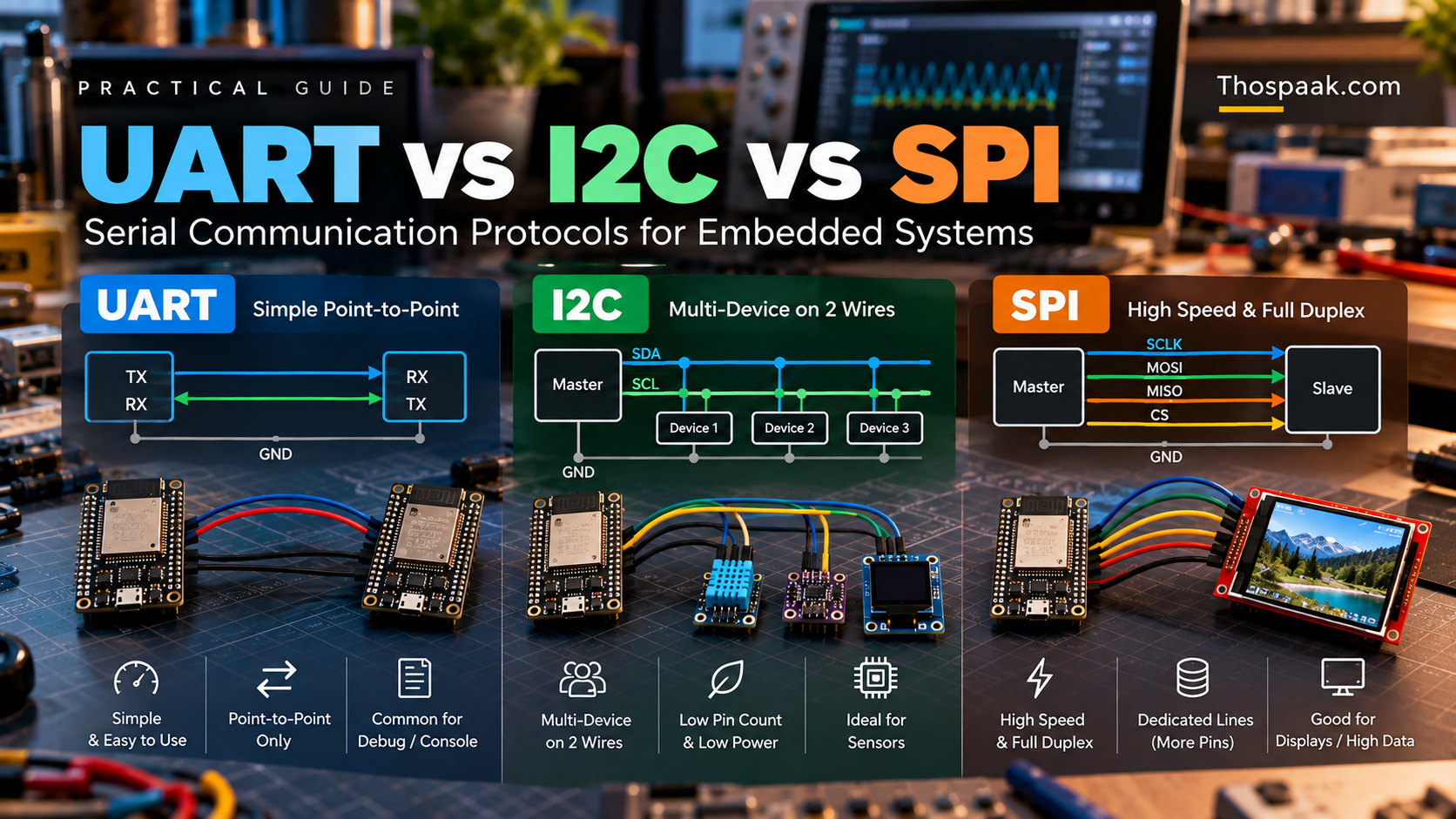
อ่านพื้นฐาน UART ได้ที่ UART, I²C และ SPI ต่างกันอย่างไร
RS485 เพิ่มอะไรให้ UART
การใช้งานทั่วไปจะมี transceiver ระหว่าง MCU กับสาย bus:
ESP32 UART
   ↓ TX/RX
RS485 Transceiver
   ↓ differential pair
A / B bus
   ↓
Field device
Transceiver แปลง logic-level serial ไปเป็น differential signaling ที่เหมาะกับ bus มากขึ้น
ดังนั้นคำว่า “ESP32 มี RS485” มักหมายถึงระบบมี UART + RS485 transceiver/interface ไม่ใช่ว่า GPIO TX/RX เองกลายเป็น RS485
Differential Signaling ช่วยเรื่อง Noise อย่างไร
RS485 ใช้ความต่างศักย์ระหว่างคู่สายแทนการตีความ signal จาก conductor เดียวเทียบ ground อย่างง่าย
แนวคิดคือ receiver สนใจ:
VA - VBมากกว่าดูแรงดันเส้นเดียว
ทำให้ common-mode noise บางส่วนถูกปฏิเสธได้ดีขึ้นเมื่อ wiring/topology ถูกต้อง
แต่ RS485 ไม่ได้ immune ต่อทุกปัญหา เช่น:
- ground potential difference มากเกินไป
- surge/lightning transient
- shielding/earthing ไม่เหมาะ
- topology แย่
- cable quality ไม่เหมาะ
- termination ผิด
RS485 มักเป็น Bus ไม่ใช่ Star แบบ Ethernet Switch
Topology ที่พบบ่อยคือ trunk/bus:
Controller ─ Device 1 ─ Device 2 ─ Device 3ไม่ใช่:
            ┌─ Device 1
Controller ─┼─ Device 2
            └─ Device 3
แบบ star ที่มี stub ยาวหลายทางอาจสร้าง reflection/signal integrity problem โดยเฉพาะเมื่อ baud rate/ระยะสูงขึ้น
ความยาวสาย, baud rate และจำนวน node ที่เหมาะสมต้องดู transceiver/cable/topology จริง ไม่ควรจำเลขเดียวใช้ทุกระบบ
Termination Resistor มีไว้ทำอะไร
Termination ช่วย match impedance ที่ปลายสายเพื่อลด reflection ใน bus ที่เหมาะสม
แนวคิดทั่วไป:
[Termination] ───────── RS485 trunk ───────── [Termination]ไม่ได้แปลว่าต้องใส่ termination ที่ทุก device
การใส่ resistor มากเกินไปทำให้ load ของ bus เปลี่ยนและอาจทำให้ signal level แย่ลง
จึงต้องอิง topology, cable impedance, baud rate และคู่มืออุปกรณ์
Biasing / Fail-safe State คืออะไร
เมื่อไม่มี driver ใดส่งข้อมูล สาย bus อาจอยู่ในสภาวะ idle ที่ต้องมี state ชัด
บางระบบใช้ biasing/fail-safe network เพื่อช่วยกำหนด idle state แต่ transceiver สมัยใหม่บางรุ่นมี internal fail-safe behavior อยู่แล้ว
ห้ามใส่ bias resistor ซ้ำหลายจุดโดยไม่ดู architecture เพราะอาจเพิ่มโหลดหรือทำให้ voltage bias ผิด
A/B Naming เป็นจุดที่พลาดบ่อย
ผู้ผลิตแต่ละรายอาจใช้ชื่อ:
- A/B
- D+/D-
- 485+/485-
และ convention ของคำว่า A/B อาจทำให้สับสนระหว่าง vendor
จึงไม่ควรต่อจาก “A ต้องต่อ A” โดยไม่ดู manual ของอุปกรณ์ทั้งสองฝั่ง
ถ้าสื่อสารไม่ได้ให้ตรวจ:
- pin naming/manual
- polarity
- common reference/ground requirement
- baud/parity/stop bit
- protocol/device address
RS485 Half-duplex ทำงานอย่างไร
ระบบ 2-wire RS485 จำนวนมากเป็น half-duplex คือหลาย node ใช้คู่สายเดียวกันทั้งส่งและรับ แต่ต้องไม่ขับ bus พร้อมกันโดยไม่มี protocol/arbitration
MCU อาจต้องควบคุม driver-enable ของ transceiver:
Receive mode
   ↓
Enable transmitter
   ↓
Send frame
   ↓
Wait transmission complete
   ↓
Disable transmitter
   ↓
Receive response
Timing ผิดอาจทำให้ response ถูกตัดหรือ bus collision
RS485 ไม่ได้กำหนด Baud Rate หรือ Message Format ของ Modbus ให้เอง
RS485 บอกเรื่อง electrical signaling แต่ไม่ได้กำหนดว่า payload ต้องเป็นอะไร
ตัวอย่าง protocol ที่อาจวิ่งบน serial physical layer มีหลายแบบ
กรณีที่พบบ่อยคือ:
RS485
  ↓
Modbus RTU
แต่มี RS485 ไม่ได้แปลว่าคือ Modbus
อ่านต่อที่ Modbus คืออะไร
Modbus RTU บน RS485 ต้องตั้งอะไรให้ตรงกัน
อย่างน้อย:
- baud rate
- parity
- stop bits
- device/server address
- protocol framing
- register map
ถ้า electrical layer ถูกแต่ communication setting ไม่ตรง ก็อ่านไม่ได้
ในทางกลับกัน ถ้า setting ถูกแต่ polarity/topology/termination ผิด ก็อ่านไม่ได้เช่นกัน
Ground ต้องต่อไหม
Differential signaling ไม่ได้หมายความว่าไม่มี common-mode limit
ระบบ field อาจต้องมี reference conductor, shielding, isolation หรือ surge protection ตาม design และ environment
คำตอบว่า “ต่อ GND ทุกครั้ง” หรือ “ห้ามต่อ GND เด็ดขาด” เป็นคำตอบที่กว้างเกินไป
ควรอิง:
- transceiver common-mode range
- isolation architecture
- cable/shield design
- ground potential difference
- manufacturer wiring guide
Isolated RS485 มีประโยชน์เมื่อไร
Isolation ช่วยแยก galvanic path ระหว่าง controller กับ field bus ในบาง application เช่น:
- อาคารหลายตู้
- ground potential ต่างกัน
- industrial environment
- meter/inverter network
- outdoor/long cable
แต่ isolation ไม่แทน surge protection หรือ wiring practice ที่เหมาะสม
RS485 เหมาะกับ Smart Farm อย่างไร
ตัวอย่าง:
Soil / Weather / Flow Sensor
       ↓ RS485
Field Bus
       ↓
Gateway / ESP32 / PLC
       ↓
MQTT / Home Assistant / Database
ข้อดีคือ sensor หลายตัวอยู่ไกล controller ได้โดยไม่ต้องให้ทุก node มี Wi-Fi/Cloud ของตัวเอง
RS485 เหมาะกับ Energy Monitoring อย่างไร
Energy Meter และ Inverter จำนวนมากมี serial interface สำหรับ telemetry/control ตามรุ่น
Architecture:
Energy Meter
   ↓ RS485 / Modbus RTU
Gateway
   ↓ MQTT/API
Load Profile / EMS
ทำให้ field layer แยกจาก application layer
Troubleshooting แยกทีละ Layer
ถ้าอ่านอุปกรณ์ไม่ได้ อย่ากระโดดไปแก้ register ก่อน
ตรวจตามลำดับ:
Power
 ↓
Wiring / polarity
 ↓
RS485 electrical bus
 ↓
UART settings
 ↓
Protocol address/function
 ↓
Register map / datatype / scale
วิธีนี้ช่วยแยก physical problem ออกจาก protocol problem
สรุป
RS485 เหมาะกับ field communication เพราะเป็น differential serial bus ที่ทนต่อ environment จริงได้ดีกว่า logic UART โดยตรงเมื่อออกแบบถูก
จำง่าย ๆ:
UART = MCU serial peripheral
RS485 = electrical field bus
Modbus RTU = protocol ที่มักวิ่งบน RS485
ถ้าจะต่อ ESP32 เข้ากับ Meter/Sensor จริง ให้ดูครบทั้ง transceiver, topology, termination, polarity, serial setting และ protocol map ไม่ใช่ดูแค่คำว่า “มี RS485” บนหน้าสินค้า