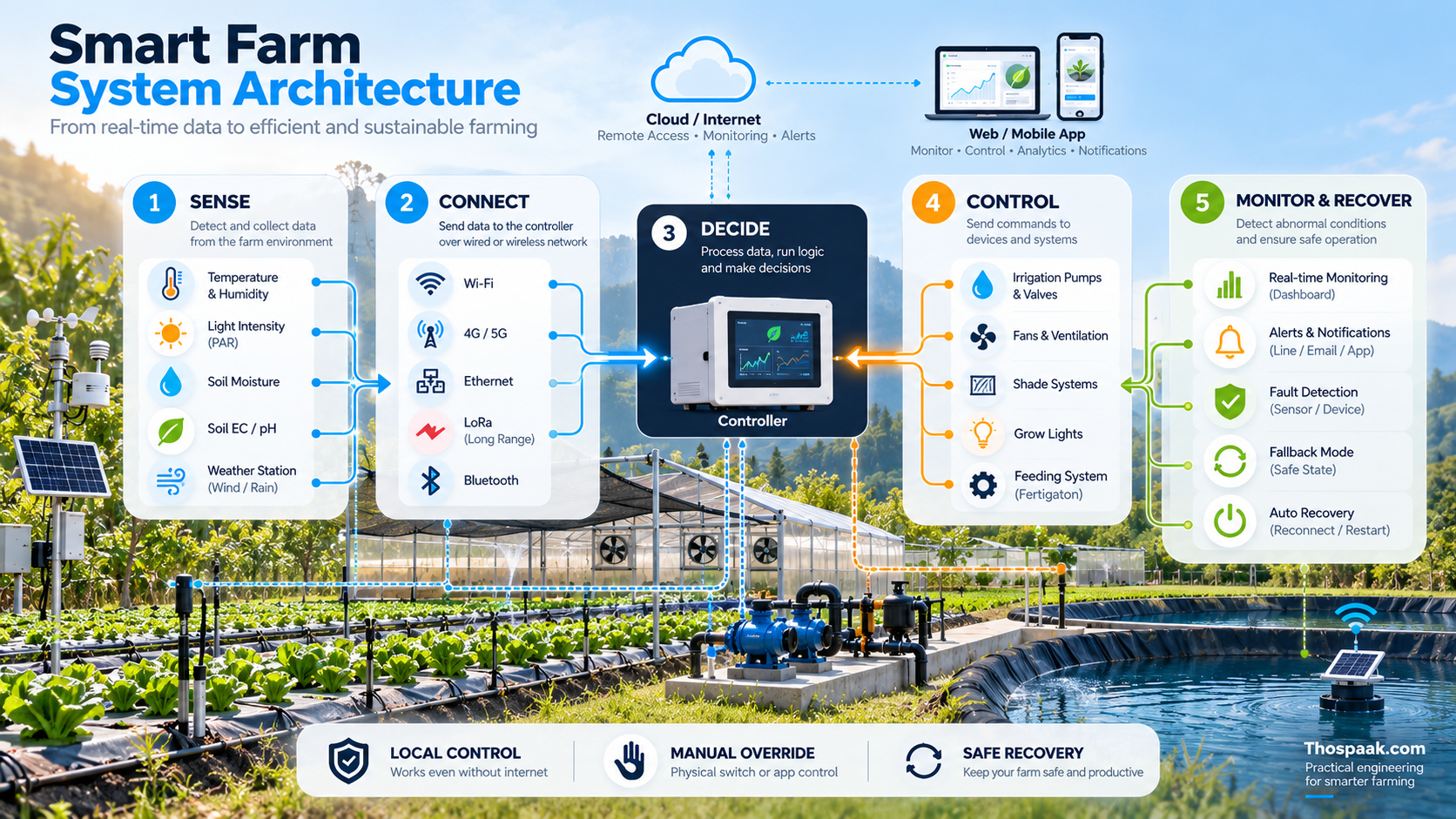
Remote Field Connectivity สำหรับ Smart Farm: เชื่อม Sensor, Gateway และ Cloud อย่างไรเมื่อพื้นที่ไกลและ Network ไม่แน่นอน.
แนวทางออกแบบ Connectivity สำหรับ Smart Farm ระหว่าง Field Node, RS485/Modbus, Wi-Fi/Ethernet, Gateway/Edge, MQTT/API, buffering, health และ offline behavior โดยไม่ผูก control ไว้กับ Cloud เส้นเดียว
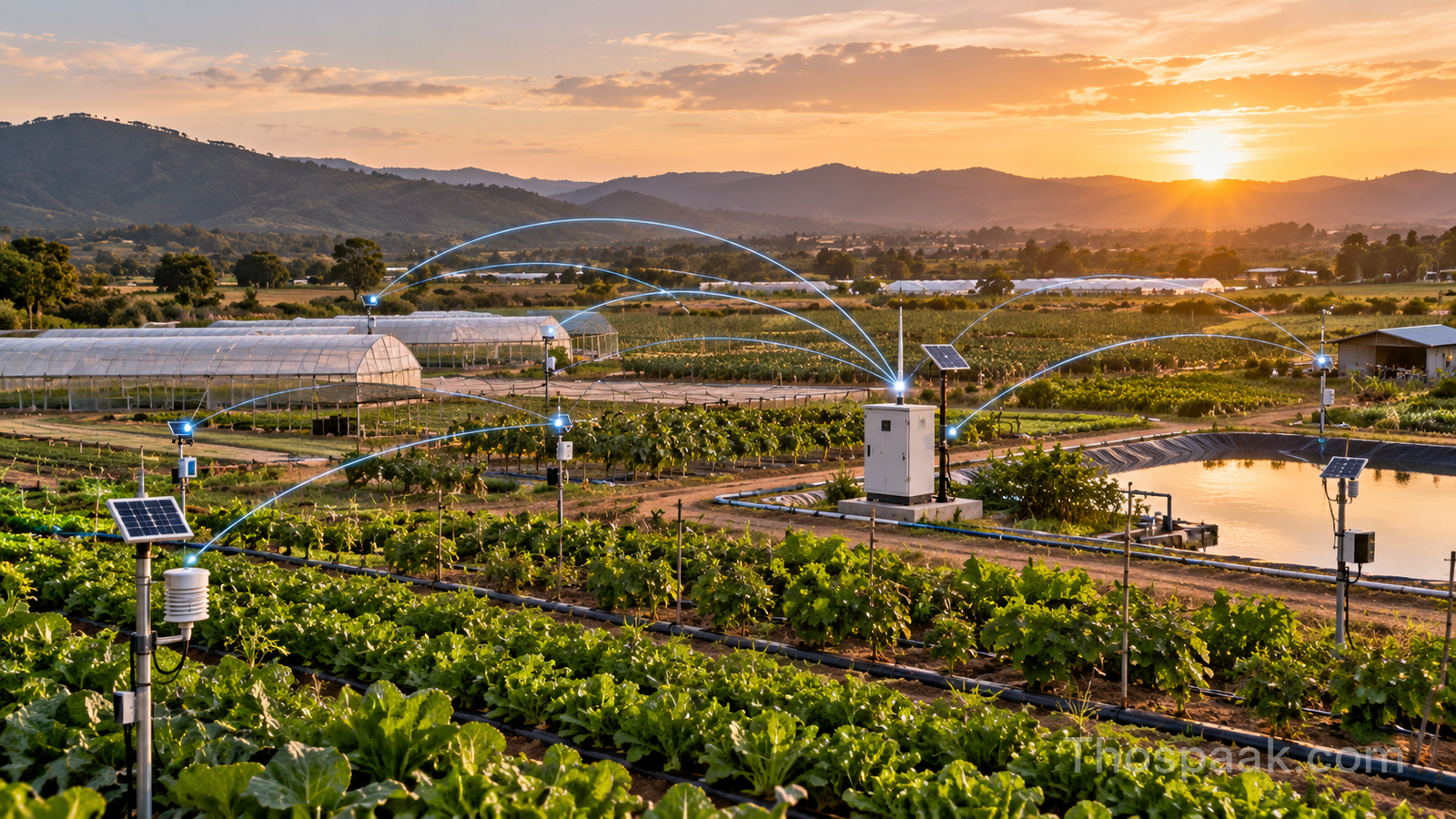
Smart Farm มักเจอข้อจำกัดที่ Smart Home ไม่เจอบ่อยเท่า เช่นระยะไกล, outdoor enclosure, power จำกัด, cable route ยาว และ Internet ไม่เสถียร
หน้านี้จึงไม่สอน protocol ซ้ำ แต่ช่วยเลือก architecture จาก environment จริง
อ่าน Foundation ที่เกี่ยวข้อง: Connectivity & IoT Integration, RS485, Modbus และ Gateway/Edge
แบ่ง Network เป็นชั้น
Field Device Layer
      ↓
Local Field Network
      ↓
Gateway / Edge
      ↓
Site Uplink / Internet
      ↓
Server / Cloud
การแยกชั้นทำให้ field control ไม่ต้องรู้รายละเอียด cloud transport ทุกอย่าง
Field Network เลือกจากระยะและ Environment
ทางเลือกอาจรวม:
- local I/O
- RS485/Modbus
- Ethernet
- Wi-Fi ในพื้นที่ที่ coverage/control ได้
- technology อื่นเมื่อ project จริง justify
อย่าเลือกจากความนิยมอย่างเดียว ให้ดู:
- cable distance
- power
- grounding/noise/isolation requirement
- enclosure/environment
- serviceability
- topology
Wi-Fi เหมาะเมื่ออะไร
Wi-Fi เหมาะกับบาง greenhouse/building/site ที่มี AP placement และ power ดี แต่ไม่ควร assume ว่าครอบคลุม outdoor field ทั้งหมดโดยไม่ survey
อ่าน Wi-Fi vs Ethernet
RS485/Modbus เหมาะเมื่ออะไร
เหมาะกับอุปกรณ์ field แบบ wired/differential และระยะที่เหมาะกับ installation แต่ต้องออกแบบ bus/termination/isolation/grounding ตามอุปกรณ์จริง
RS485 คือ physical layer ไม่ใช่ Modbus เอง
Gateway เป็น Boundary สำคัญ
Gateway สามารถ:
- poll field devices
- normalize units/names
- timestamp
- buffer data
- publish MQTT/API
- run local rules บางส่วน
- expose health
การมี Gateway ช่วยลด coupling ระหว่าง field และ cloud
Store-and-forward
ถ้า Internet ล่ม telemetry ไม่จำเป็นต้องหายทั้งหมด
Gateway อาจ buffer แบบ bounded แล้วส่งย้อนหลังเมื่อ link กลับมา โดยต้องรักษา original timestamp
measurement time ≠ upload timeDashboard ต้องไม่ตีความข้อมูลย้อนหลังว่าเป็นข้อมูลสด
Command Path ต้องระวังมากกว่า Telemetry
Telemetry ส่งช้าบางครั้งยังมีประโยชน์ แต่ command เก่าที่มาถึงช้าอาจอันตราย
command ควรมี:
- target
- request id
- timestamp/expiry
- ownership/mode
- acknowledgement/result เมื่อเหมาะสม
อย่า replay command เก่าเพียงเพราะ message queue กลับมาทำงาน
Health Model
ควรแยก:
- device online
- sensor data fresh
- gateway uplink online
- server reachable
- actuator feedback healthy
คำว่า “Online” คำเดียวไม่พอ
Local Control เมื่อ Internet ล่ม
สิ่งที่จำเป็น เช่น bounded irrigation, tank protection หรือ manual operation ควรพิจารณาให้ทำได้ local ตาม risk/design
Cloud เหมาะกับ:
- history
- dashboard
- remote supervision
- analytics
- notification
มากกว่าการเป็น control/safety path เพียงเส้นเดียว
Power Failure ก็เป็น Connectivity Failure
field node ที่ไม่มีไฟจะไม่มี network ดังนั้น architecture ต้องคิด power source/backup/restart behavior พร้อม connectivity
Reconnect Behavior
เมื่อ link กลับมา:
- sync telemetry ตาม timestamp
- re-establish subscriptions
- refresh physical state
- reject expired command
- avoid duplicate action
Security Boundary
ไม่ควร expose field devices ทุกตัวตรง Internet ถ้าไม่จำเป็น ใช้ gateway/network segmentation/authentication ตาม architecture ที่เหมาะสม
Monitoring ≠ Control ≠ Safety
Network ที่ reliable ขึ้นช่วย availability แต่ไม่แทน physical/electrical protection
ดู degraded operation ต่อที่ Offline, Manual & Fail-safe และ data model ที่ Farm Data Logging
Remote Field Connectivity ที่ดีจึงไม่ได้แปลว่า “ทุก Sensor online ตลอด” แต่คือ ระบบรู้ว่า link ไหนล่ม เก็บข้อมูลอย่างไร คำสั่งไหนยัง valid และ local operation อะไรต้องอยู่ต่อได้